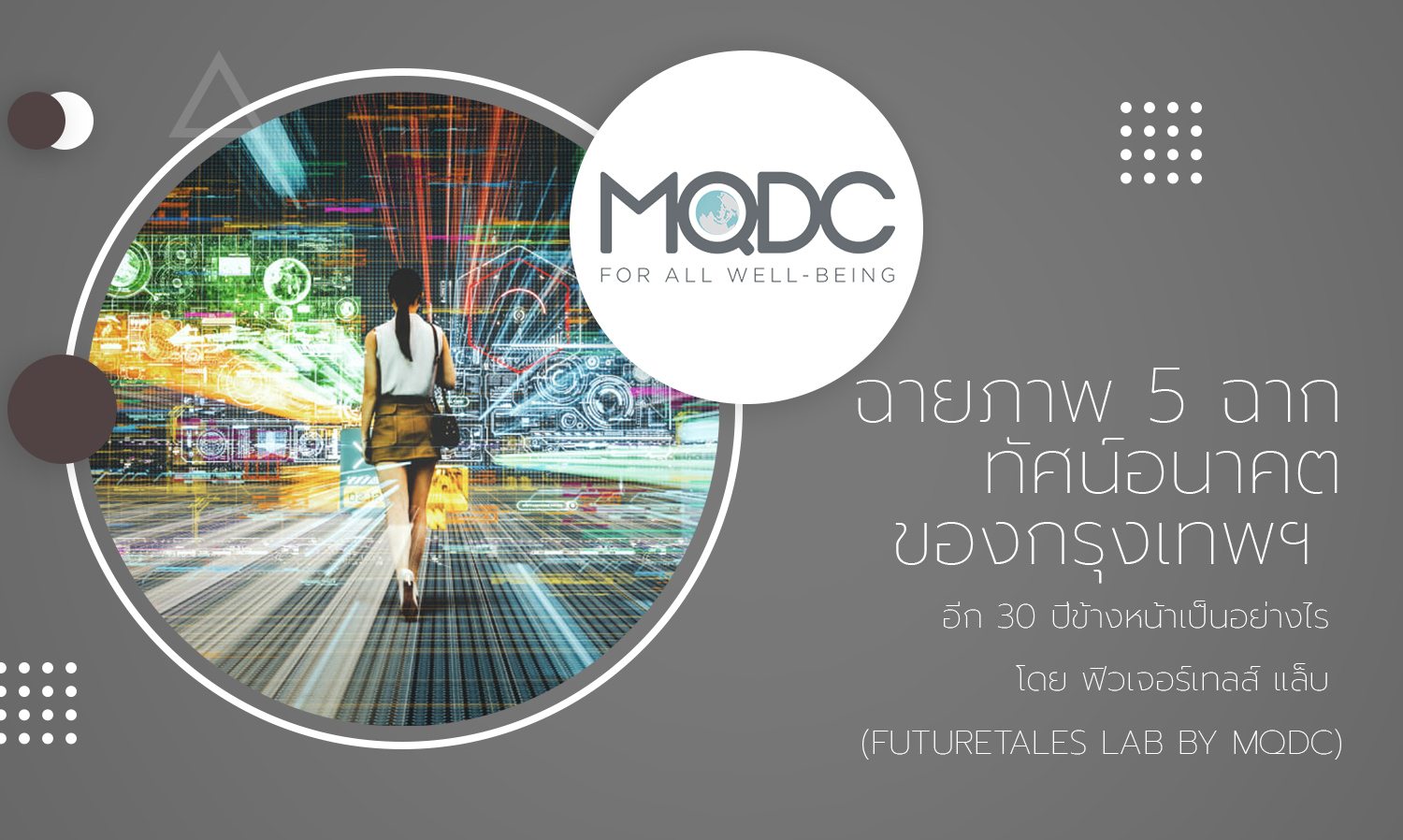
Imagining 5 Future Scenarios for Bangkok in 30 Years by FutureTales Lab
Dr. Kande Liewphairoj, Executive Director of FutureTales Lab, Magnolia Quality Development Corporation Limited (MQDC) revealed that the Future Studies Research Center, FutureTales Lab, collaborated with Arup Foresight and Innovation in Australia to study 5 future scenarios for the next 30 years, or by 2050. These scenarios are likely to occur in the Greater Bangkok area, which encompasses the metropolitan area and surrounding cities, extending 150 km to the east. The aim is to provoke thought and address the needs for urban development that considers communities and the environment, while expanding the vision of these scenarios through comprehensive analysis across six dimensions:
- Living (Live)
- Working (Work)
- Learning (Learn)
- Leisure (Play)
- Mobility (Mobility)
- Sustainable Care for All Life (Sustainability)
“The research on the 5 future scenarios of Greater Bangkok builds on previous studies of the Mega Trends of Greater Bangkok that have been disseminated recently, while continuing to focus on urbanization. We believe that researching future scenarios will help us envision a desirable future together, which includes not only people but also biodiversity, other living beings in the ecosystem, and the environment. The mentioned future scenarios do not definitively predict what will or will not happen but rather facilitate a more comprehensive analysis. Each scenario presents both opportunities and challenges, stimulating thoughts on how to prepare for any future events,” Dr. Kande stated.
Dr. Anne Kowasevich White, Head of Arup Foresight and Innovation in Australia stated, “As the world begins to awaken from COVID-19, looking ahead and studying the potential future of Bangkok in 2050 is crucial and interesting. In recent years, many new lifestyles have emerged in terms of work, travel, and various activities, requiring everyone to adapt to these changes. The impacts of climate change are becoming more evident and severe. Additionally, people are placing greater importance on health and well-being in the future, with many cities designing to address these issues. Furthermore, the elderly seek ways to maintain their physical and mental health. From all these narratives, we have drawn some global trends to research and develop the 5 future scenarios, which can be used to strategize, analyze weaknesses, and consider opportunities for Bangkok in the future.”
Dr. Phannarin Sumanasethakul, Director of Future Forecasting Research at FutureTales Lab, Magnolia Quality Development Corporation Limited (MQDC) stated that the study revealed that Greater Bangkok leads to the possibilities of 5 future scenarios as follows:
Technotopia: The main driving factors for this scenario include the development of automation systems, the expansion of transportation connecting Thailand and neighboring countries, and community participation. For instance, in this scenario, a 7-year-old child will change their behavior, attending online classes from their bed and using VR devices to learn without needing to travel to school. We envision that in 30 years, after the global impact of COVID-19, there will be changes in major tech companies, driving technology to connect and integrate, and Thailand may adopt governance methods from tech companies to manage and serve the public more.
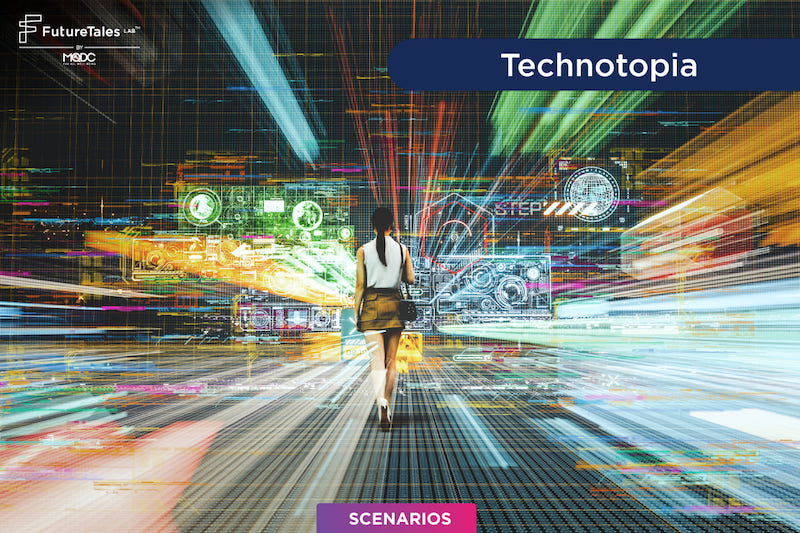
Thailand must ensure that it manages various debts from borrowing by 2030 to support the domestic economy, along with the development of surrounding cities. The increase of over 25 million people in Bangkok and nearby areas will position Thailand as one of the business hubs in Asia by 2050.
Urban Playgrounds: People will place greater importance on health or Active Lifestyle at all ages, along with policies promoting urban development to accommodate various activities and enhance the skills of urban residents. This will attract more people to live and work in the city, utilizing technology to design and cater to the diversity of urban populations, such as those with disabilities who can still engage in physical activities.
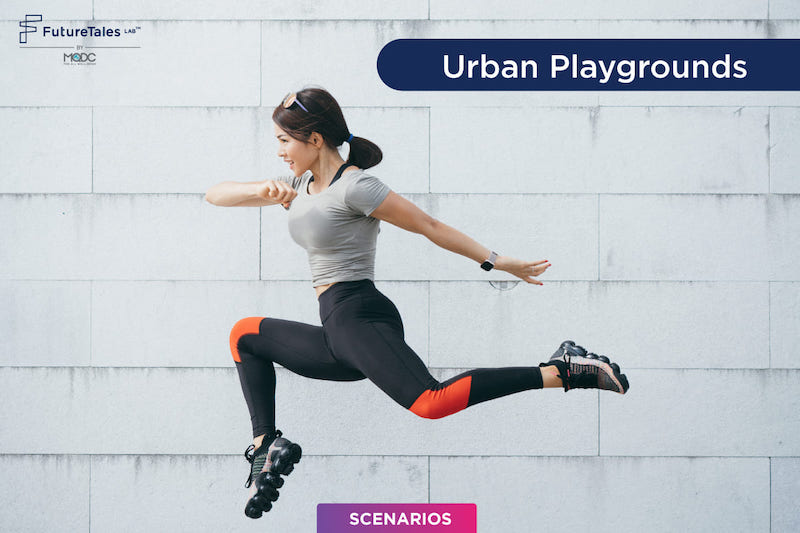
Thailand should focus on developing cities that cater to all age groups, encouraging health awareness, and enhancing surrounding areas to ensure safety, promoting the health of urban residents to feel invigorated at all times by 2030. When the needs of the domestic population are met, by 2050, Thailand will be able to attract people from around the world interested in an Active Lifestyle.
Decentralised Resilience: Emphasizing the importance of adapting to the changing climate and creating living spaces in collaboration with surrounding communities. Transportation between Bangkok and nearby cities should be a crucial infrastructure for Bangkok residents, allowing travel even during urban flooding. Additionally, caring for people in the city, communities, and surrounding areas is essential and should not be overlooked.
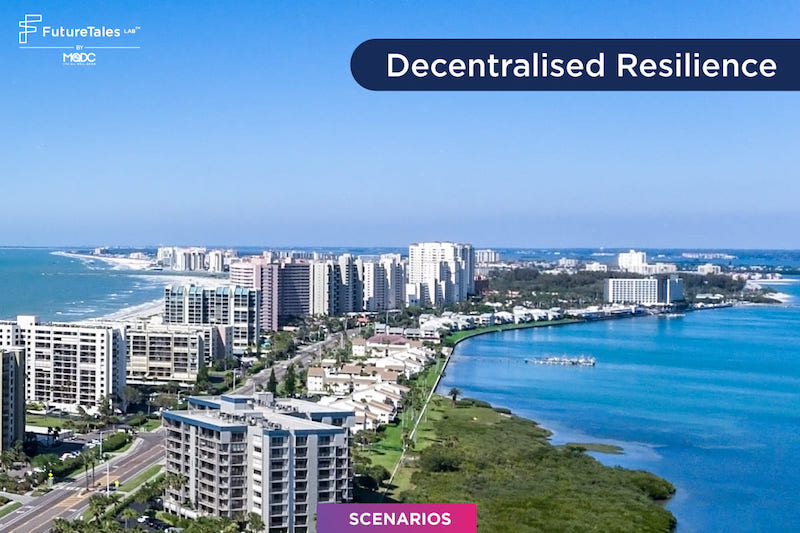
We are witnessing major issues such as drought and flooding affecting transportation systems or food production, which may necessitate relocating the capital. This could lead to a disparity between old Bangkok (affected by natural disasters like flooding) and new Bangkok, where the economy in the old city may collapse, resulting in increased urban poverty and homelessness, forcing people to move to abandoned buildings or out of the city. In old Bangkok, informal innovations may emerge, such as floating houses or semi-prefabricated structures, or using abandoned buildings for clean energy farms, which can coexist with unavoidable disasters.
Therefore, Thailand should focus on addressing the impacts of drought and flooding in both Bangkok and surrounding areas to lead to the development of mixed-use industrial zones that meet new lifestyle demands by 2030. This initiative will ensure that Thailand has cities capable of managing various natural disaster challenges effectively by 2050.
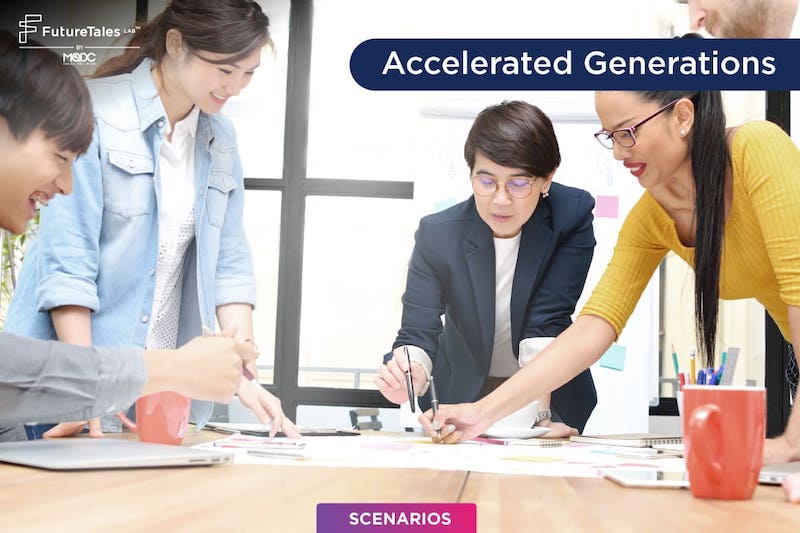
Accelerated Generations: The development of education and skills must be significantly improved in Bangkok and surrounding areas to ensure the systematic and effective reintegration of the elderly into the workforce. This includes creating shared value by involving communities in designing urban development and environmental care simultaneously.
To accommodate the elderly's return to active roles in Bangkok and surrounding cities, Thailand must adopt appropriate economic strategies, emphasizing Eastern wisdom that values family and balance with nature by 2030. By 2050, Thailand will drive leadership in startups, resulting from the collaboration of diverse age groups in the labor market, combining the knowledge and expertise of the elderly with the innovative ideas of future working-age individuals.
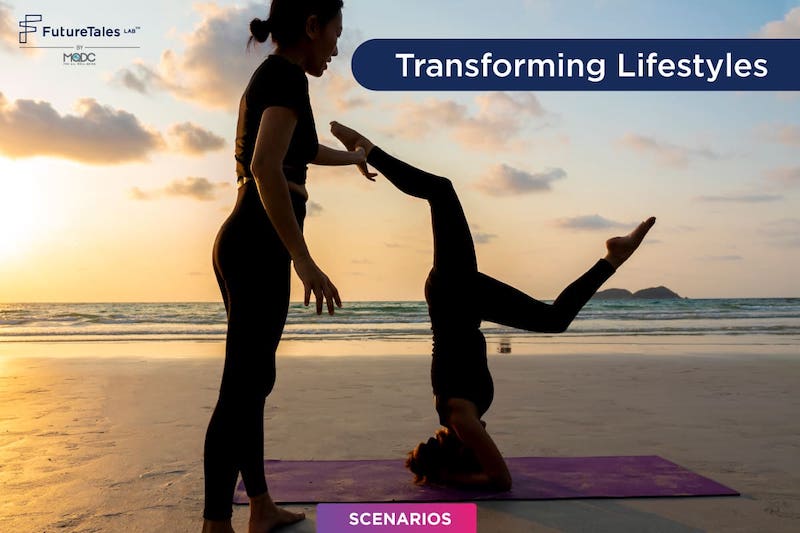
Transforming Lifestyle: Tourism will undergo significant changes in the future, alongside environmental conservation policies, which will play a crucial role in promoting sustainable and health-oriented tourism. Additionally, developing skills within the tourism industry will be essential. We are witnessing a shift in the tourism industry's perspective, moving from focusing on tourist numbers to long-term visitors in Thailand who prioritize physical and mental health. Furthermore, we see an emphasis on access to good living conditions, encouraging people to slow down, reflect on the value of life, and care for the environment.
Thailand should prioritize future skill development to strategize for major cities and surrounding areas to meet the Mega City by 2030 that reflects a green city, rejuvenating physical and mental health, and creating spaces for future skill development to attract workers from around the globe, reinforcing its position as a city that promotes well-being and is a green city capable of sustainably rejuvenating body and mind, along with new future learning spaces as a primary goal by 2050.
“FutureTales Lab by MQDC aims to analyze and study various perspectives in each scenario over the next 30 years, whether from the viewpoint of urban developers, policymakers, or the communities involved, providing recommendations to each stakeholder in urban development. This will enable all parties to prepare for and address a desirable future collaboratively and smoothly,” Dr. Phannarin concluded.
Reference: Future of Urbanisation Scenarios Research
Megatrends: https://drive.google.com/file/d/1FwJDRUFtCheTytxggg-nItHqmmnr1ivy/view
Future Scenarios: https://drive.google.com/file/d/1ecBXkbiKWW6shULsbaUz9BrR_R6xRHfs/view